
Lee County's Owner-of-Record Card
The assessor's owner-of-record detail lives in the Lee County Property Card Search portal. Not every field renders reliably in a browser, though. The table below lists fields to verify rather than promising what the screen will show. The Commissioner's office can identify a tax map or tax ID by search. It can also confirm one by phone. Treat the property card as the current assessment record. Then compare it with the latest deed. That shows whether a transfer has been recorded since.
| Owner name | Exact card label and current display not verified |
|---|---|
| Vesting or entity | Confirm wording in the deed, not only on the roll |
| Mailing address | Result field not confirmed; may differ from situs |
| Situs and tax map | Use these keys to match the intended parcel |
| Deed reference | Research card layout did not show a verified field |
| Recording date | Read from the latest Clerk instrument |
On a tax record, the current owner is simply the party liable for the bill. That person may not occupy the property at all. A mailing address on the card might point to a separate location or belong to an entity. Read it as a billing contact, not a residence. Do not use it to work around privacy protections.
Lee County's Tax-Ticket Snapshot
Lee County runs a hybrid schedule. January 1 sets the rates. July 1 fixes the owner of record printed on the tax ticket. A deed recorded after July 1 can leave the prior owner on the bill. That prior name can linger for the whole tax year. The ticket answers who the county billed on its date. It does not undo a later recorded transfer. Always compare the deed's recording date with the tax year before judging the owner field.
This timing gap is the main trap in a Lee County current-owner check. The Commissioner notes that the 2025 schedule made the split dates explicit. A card field may refresh on its own cycle. But no refresh interval for Property Card Search is published. Confirm the actual deed date with the Clerk. See the Commissioner's owner-date explanation.

The assessment FAQ explains why a tax bill can show an earlier owner than a later deed.
Lee County Owner Card Timing
The county's Property Card Search page is the starting point for assessment data. Its live portal, however, renders inconsistently. So the exact owner field label, card refresh schedule, and deed reference layout are not settled details. Never assume a fixed number of days for a card update. When a recent sale matters, check the Clerk's recorded instrument first. Then ask the Commissioner of the Revenue whether the property card reflects that filing. The Commissioner can be reached at (276) 346-7722 or by mail at P.O. Box 96, Jonesville, VA 24263. Give the office the parcel tax-map number whenever possible. It is a far better match key than a common surname. A blank search result or an old owner name is a reason to call. It is not proof the deed went unfiled.
Confirm the Lee County Current Owner
A current-owner check in Lee County comes down to two records and two dates. The assessment card shows the name on the county's tax roll. The latest deed records the grantee plus the legal description. Lee County's tax ticket uses an owner-of-record date of July 1. A deed may be recorded after that date. It may not change the ticket's name until the next tax year. Compare the deed date before concluding the roll is stale.
- Find the parcel in Property Card Search and save the owner spelling and tax-map reference.
- Search the newest Lee land-record entry and confirm the grantee, recording date, and legal description.
- Compare the deed date with July 1 and the tax year printed on the bill.
- If a company is grantee, use the SCC only for entity context; the deed still establishes the parcel transfer.
- Owner of record
- The owner name shown in an assessment or land-record source at its stated date.
- Vesting
- The words in a deed that show how the grantee holds the interest.
- Tax-ticket date
- Lee County's July 1 reference date for the owner printed on a tax bill.
Newest Lee County Deed Date
The Circuit Court Clerk records land transfers in Lee County. Virginia SRA is the remote index route. Search by the current name or a parcel clue. Then note the grantee, the recording date, the instrument reference, and the legal description. The tax ticket may still show the July 1 owner. But the newest recorded deed is the stronger title evidence. Lee's SRA index start year is not published. Image access depends on the Clerk's authorization or a counter visit. The current deed may not be visible online. In that case, call the Clerk at (276) 346-7763 or visit 33640 Main Street in Jonesville. The office dates to 1793 as an institution, but not every volume has online images. Ask for the recorded copy by book/page or instrument reference. A recorded deed proves a filing, not a title opinion. Virginia's SRA land-record portal is the remote index entry point.
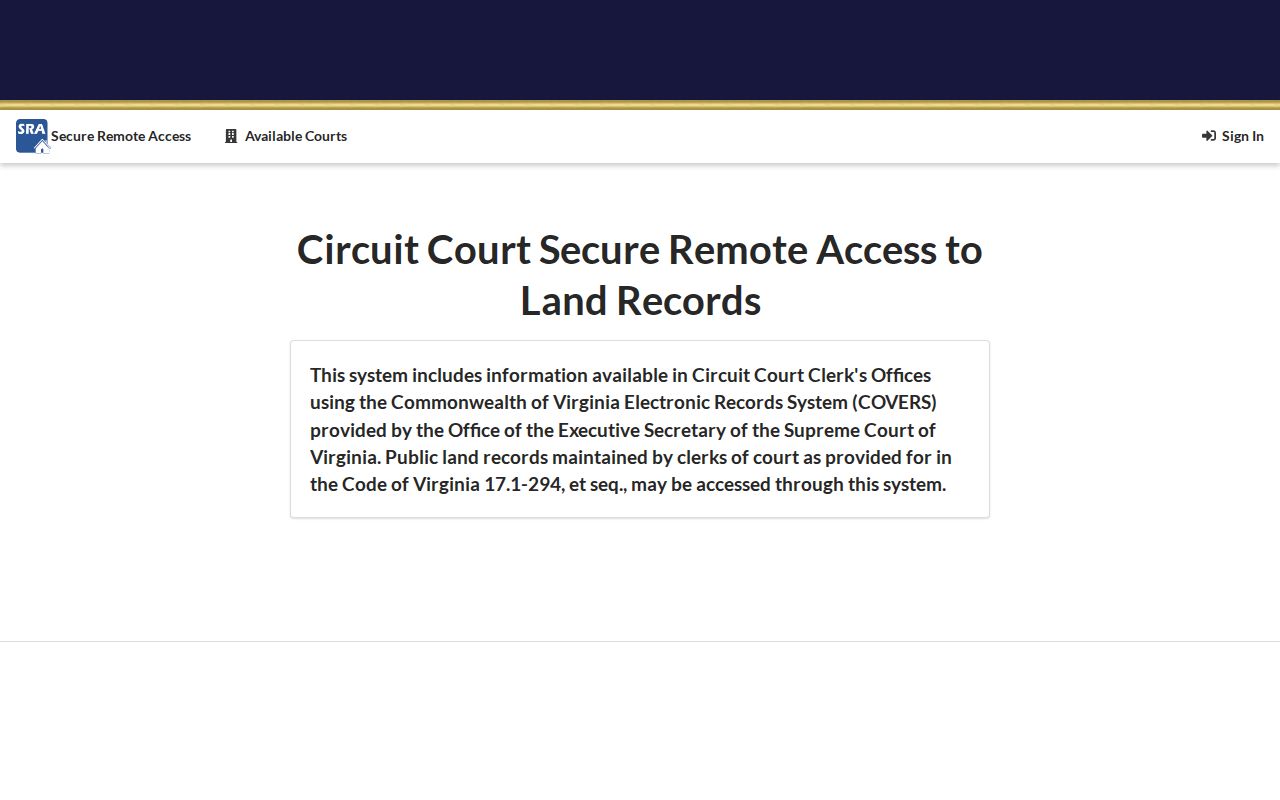
The portal can identify a filing even when the image must be requested locally.
Lee County Company Owner Names
Sometimes the owner of record is not a person at all. It may be an LLC, a trustee, or an estate. The deed tells you which. The grantee and vesting language records the exact legal name on title. That name is your starting point for any Lee County property search involving a business entity. Virginia's SCC Clerk's Information System can then supply status, registered agent, principal office, and filing history. Those filings add useful context. Still, they do not prove the entity holds the parcel. The deed itself must tie the entity to the Lee County property records.
Trusts add their own wrinkle. The recorder may index a trust by trustee name or by trust name. A probate transfer can name an executor or administrator instead. Keep the person signing for an entity separate from the owner shown in the land record. Estates go through the Lee Circuit Clerk. That office can explain the probate file route when a current owner question turns on one. Probate appointments are requested through that office. To match a business name against the deed, start with the official Virginia SCC entity records.
In short, the state filing describes the entity, while the recorded Lee County deed records the transfer itself.
Lee County Situs Versus Mailing
Situs and mailing address are two different things. The situs is where the parcel sits. The mailing address is where the tax bill goes, and the two often diverge when a mortgage company or an out-of-county owner of record handles the payment. So a current owner record is never a current resident record. Keep situs, mailing address, and legal description in separate fields in your notes.
Rural Lee County complicates addresses further. Rural routes, town limits, ZIP labels, and E-911 assignments can all stray from an older deed's wording. Jonesville, Pennington Gap, and the former St. Charles postal names are geographic clues, not title proof. When an old route description will not match a current address, the Commissioner or the E-911 contact can help connect the two for a clean property search.
Lee County SRA Image Access
Virginia's SRA can offer a free land-record index for a participating court. Images stay limited to subscribers the local clerk authorizes. Lee County's index cutoff and live search fields are not published. Plan to confirm them with the Clerk. The index may return only a reference number. Use it to request counter access or a copy. A missing image never means a missing transfer.
Copy work at the Clerk's office runs 50 cents per page. A certified document adds $2. Card payments carry a 4% convenience charge. Those are local copy charges, not the statewide portal's subscriber price. For formal proof of the current owner, order a certified copy of the latest deed. Compare its date with the assessment card. Read the Virginia Courts SRA rules before choosing an index or image route.
Contacting a Lee County Owner
A mailing address in the tax roll exists so the county can send the bill. It is not an invitation to locate or approach a person at home. Title, tax, or permit questions belong with the county office that handles them. For a transaction, rely on the parties and notices in the recorded instrument. Or work through a licensed title professional pulling the deed records. Remember that some owners use Virginia's Address Confidentiality Program. It gives eligible survivors a substitute mailing address and shields the real one under state law.
Lawful use. Use owner-of-record information for a property matter or lawful civic purpose. Do not use an address or name to stalk, threaten, intimidate, or harass anyone, and do not seek to defeat a confidentiality program.