
Find a Lee County Property Owner
No single name search settles the question. Ownership in Lee County comes from a record trail. The assessment card points to the parcel and its owner of record. The recorded deed proves the transfer itself. Begin with an address. Note the tax-map key from the card. Then run the owner or parcel through the land-record index. If the card and the deed disagree on a name, compare recording dates first. One source is often just older than the other rather than wrong.
- Search the county's Property Card Search by situs address or owner name. Call the Commissioner if the rural address does not return a clear match.
- Record the tax-map number or tax ID, and note the owner's name exactly as shown.
- Find the newest deed in Virginia SRA or through the Clerk. Confirm the grantee and legal description.
- If an entity owns the parcel, check the Virginia SCC filing record for entity context, then keep title confirmation with the deed.
Lee County's July 1 Owner Date
Lee County uses the owner of record as of July 1 for the tax ticket, while rates take effect January 1 under the hybrid schedule adopted in 2025. A deed recorded after July 1 may leave the prior name on the bill until the next tax year. That is why asking who owns a property can produce different answers from the assessment card and the newest recorded deed.
Compare the tax ticket's year and owner date with the Clerk's recording date. The Treasurer's bill is a billing record; it is not the instrument that transfers title. For the present owner detail, the Lee County current-owner check sets out the roll-to-deed comparison.
The Commissioner's explanation of the 2025 schedule describes the July 1 rule.
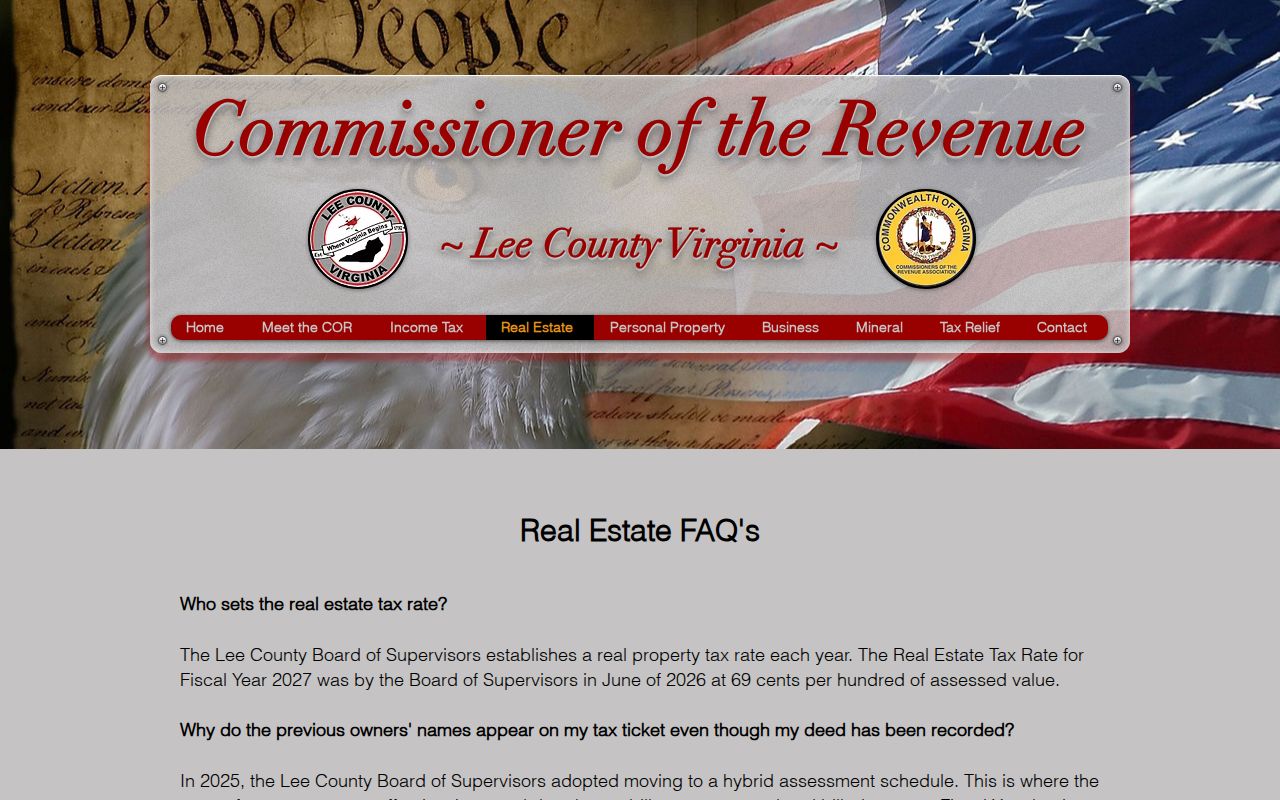
Note: The assessor FAQ explains why a tax ticket can still show a former owner after a deed has been recorded.
Latest Lee County Deed Confirmation
The assessment roll helps you find the parcel. The newest recorded deed is better evidence of who took title. Virginia SRA may offer a free index for an available court. Images require local-clerk authorization or a counter visit. Pull the grantee, the recording date, the reference number, and the legal description. If an index image is not open, call the Lee Clerk. Ask what access applies to that record. A deed search can also reveal transfers to an executor, administrator, trustee, or company. Read the vesting words and the attached legal description instead of trusting a name alone. For a sale or a title concern, consult a title professional. Request a certified copy from the Clerk when a formal document is needed. The Lee County deed-record page explains the local index, older books, and the copy route.
Where Lee County Owner Data Lives
No single Lee County record holds every ownership clue. The Commissioner keeps assessment and mapping information. The Clerk records deeds. GIS provides a visual parcel reference. A Treasurer's bill may show an owner tied to the July 1 tax date, which can lag a later transfer. Judge each source by its purpose and its date rather than treating them as interchangeable copies of one another.
| Source | Owner Info It Gives | Access |
|---|---|---|
| Property Card Search | Assessment owner and tax-map clues; exact card fields not verified | County portal or Commissioner phone help |
| Newest deed | Grantee, grantor, recording date, legal description | SRA index and Clerk counter |
| Virginia SCC | Entity status, registered agent, principal office, filings | State entity filing system |
| County GIS | Visual parcel context; ownership display not confirmed | Public-access terms and map viewer |
The owner of record is not always the person occupying the house or land. Public property files document title and assessment data, not a roster of current residents. A tax mailing address may belong to an owner. It may instead point to a mortgage company or an out-of-county recipient. Treat it as a billing detail, never as a home address for unrelated contact.
Lee County LLC, Trust, and Estate Owners
A Lee County parcel may be vested in an LLC, a trust, or an estate. It may not name a person at all. Search the entity spelling exactly as the deed spells it. Virginia SCC's Clerk's Information System can show an entity's status, registered agent, principal office, and filing history. Those business details do not prove the entity owns a given tract. Only the deed and its legal description make that connection. An estate may hold or transfer property. Look for an executor or administrator in the probate record. Then compare any estate deed in the land index. Lee Circuit Court requires probate appointments. The Clerk lists wills and probate among its records. An heir named in a notice is not itself a deed. Keep the owner, the fiduciary, and the parcel roles separate. Use the official Virginia SCC entity search for any company named in the instrument.
Note: The entity filing gives context for the grantee name, while the Lee deed ties that grantee to the land.
Lee County Situs and Mailing Addresses
A situs address fixes where the parcel sits. A mailing address tells the county where to send the tax bill. In Lee County the two often differ. The bill may reach an out-of-county owner or a mortgage company. The mailing field is a record entry. It is not proof that the named recipient lives on the parcel. Anchor the search to the deed's legal description and the county tax-map key. These keep it pinned to the correct tract.
Rural route and valley addresses rarely line up. Town labels, ZIP codes, E-911 assignments, and parcel records can each tell a slightly different story. A Jonesville or Pennington Gap place label alone does not place a parcel inside the town. Records drift over decades. Older deeds are often the worst offenders. They still carry a route number or a former street name. When that happens, ask the Commissioner or the E-911 contact to connect the old clue to the current situs address.
Virginia Address Privacy Protections
Virginia shields some addresses by law. The Address Confidentiality Program gives eligible survivors of domestic violence, stalking, child abduction, sexual violence, or human trafficking a substitute mailing address managed by the Attorney General. Eligibility is defined by statute. The actual address stays protected from FOIA release except in narrow legal circumstances. No one should use a tax-roll mailing entry to defeat those protections or to locate a person who has sought confidentiality.
Public ownership records still serve honest purposes. Title work, tax questions, civic review, and local history all depend on them. A name or mailing address should never become a tool for pursuing someone or inferring where they live. For program eligibility and applications, the official statute and a qualified victim-service provider are the right sources.
The governing provision is Virginia Code section 2.2-515.2.
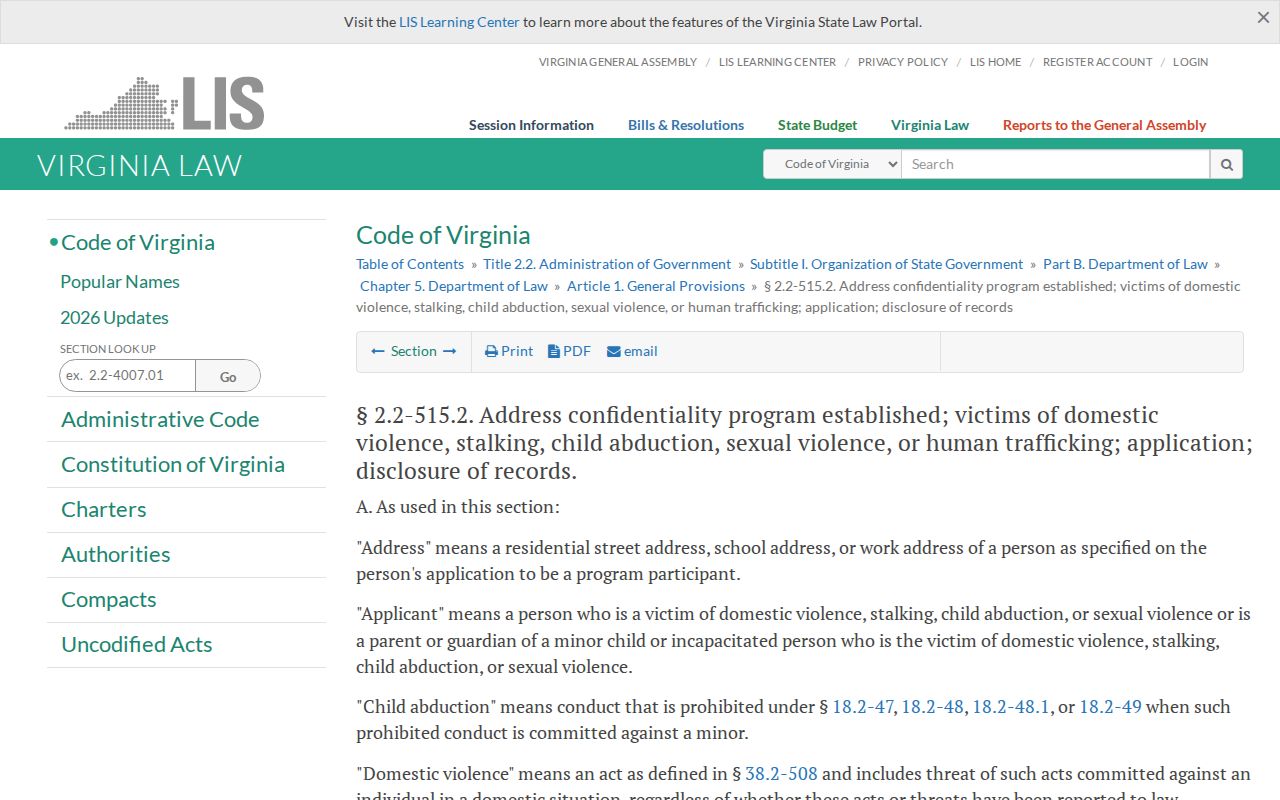
The state program is a privacy safeguard, not a public search tool.
Lee County's Former St. Charles Land
St. Charles lost its town charter. Virginia's 2022 Chapter 89 terminated the incorporation and vested the town's real, personal, and intangible property, along with its debt, in Lee County. No new deed was needed. That answers a common question when an older municipal reference leaves doubt about which government holds former town land. It does not replace the deed and tax-map search for any particular parcel.
For current assessment and land instruments in the former town area, go through the county Commissioner and Clerk. ZIP 24282 helps identify a location. It says nothing about current town status. Jonesville and Pennington Gap are the county's two incorporated towns, and their land records remain county-held.
The 2022 act on St. Charles states the transfer.
Limits of a Lee County Owner Lookup
Ownership here means record ownership. Who owns a property in Lee County comes down to whose name appears in a relevant record, not who controls an entity behind the scenes. Occupancy proves nothing. The assessment card can lag. A deed recorded after the county's July 1 tax-ticket date may not appear there yet, and a name in a GIS pop-up, where one is shown, is not a title opinion. The latest recorded deed and its legal description remain the stronger confirmation.
Lawful use. Use Lee County owner information for property diligence, title questions, family history, and civic review. Never use a record to stalk, threaten, target, or harass a person.