
How a Lee County Property Search Works
Lee County advertises its Property Card Search through the Commissioner of the Revenue. The county site notes that the office can locate a tax-map number or tax ID. It does this by search or by phone. The card interface itself may not load in every browser. Its exact fields remain unconfirmed. Treat the address as a lead. Then carry the parcel ID and owner spelling with you into the deed index, the Treasurer's information, and the GIS map.
- Search the county Property Card Search by the situs address or owner name. If it fails, call the Commissioner at (276) 346-7722 for tax-map or tax-ID help.
- Write down the owner spelling, property address, mailing address if shown, and parcel identifier. Keep the source and date beside each value.
- Use the owner name and parcel description to find the latest deed in Virginia SRA or at the Clerk's public records room.
- Check Treasurer rules for taxes and GIS for a visual parcel match. Request a clerk copy when the deed image is not available online.
Lee County Assessor Search Fields
The county links to Property Card Search. It advertises an owner-name route, though the interactive fields are not always visible. Expect the usual search keys: address, owner name, and parcel identifier. A descriptive row label may not match the exact wording on the screen. If the form rejects an address or a name, contact the Commissioner. That office can supply the correct tax-map or tax-ID reference.
| Field label to check | Type | Required | Format or status |
|---|---|---|---|
| Owner name | Text | Not verified | Owner search advertised; exact format unknown |
| Situs/property address | Text | Not verified | Expected search key; live field not seen |
| Tax map/tax ID | Text or parcel key | Not verified | Commissioner can provide the local identifier |
| Mailing address | Result field | Not applicable | Card layout and label not confirmed |
Start at the county Property Card Search entry point. Then call the office if a result does not match the parcel you intend to research.
Lee County's Tax-Map Handoff
A Lee County property search gets sharper with one key. The everyday address becomes the county's tax-map number or tax ID. The Commissioner provides that key by search or phone. No published number pattern exists. Never add punctuation or guess a prefix from a neighboring county. Keep the number exactly as the county gives it. Use it when moving from assessment to GIS or a deed description.
Sometimes the Property Card Search times out or returns several matches. In that case, call the Commissioner of the Revenue at (276) 346-7722. Have the road name, owner spelling, town or place label, and any book/page reference ready. This helps most with older deeds. Those deeds may use a route or tract description instead of a modern situs address. A tax map number is an index key. It does not replace the legal description.
- Tax-map number
- The county assessment identifier used to connect a parcel card and map.
- Situs address
- The physical location of the property for assessment or emergency addressing.
- Mailing address
- The destination for a tax bill, which can be different from the parcel's situs.
Lee County's SRA Deed Search
Virginia Secure Remote Access is the land-record index route for participating circuit courts. A free index may be available without a login when a court is marked available. Images require subscriber access approved by the local clerk and may carry fees. The Lee SRA screen does not publish its exact fields, dropdown values, or cutoff year. So keep the result number, party name, and recording reference for a clerk follow-up.
The index works best after the card search. The card search gives you an owner spelling or legal description. Search the name as a grantor or grantee. Then confirm the deed image and parcel description at the clerk's office if the image is locked. The clerk lists land records, financing statements, assumed names, wills, probate, judgments, and other records. The public page does not promise equal online coverage for every category, though. The Virginia SRA access page explains the index/image difference.
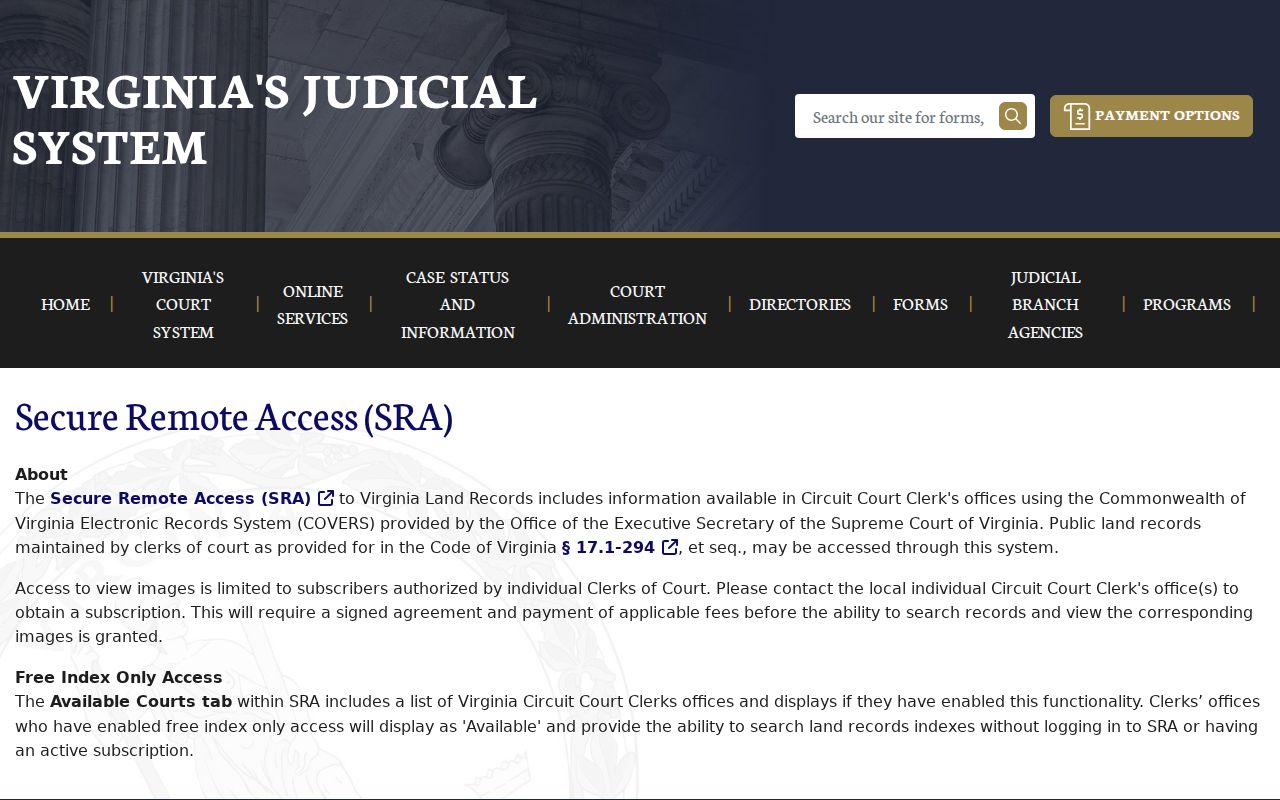
A visible index reference can still require a visit to the local clerk for the document itself.
Lee County Address and ZIP Clues
Lee County mixes rural route and valley addresses, town limits, ZIP place labels, E-911 assignments, and tax-map records. These layers do not always match. Jonesville uses ZIP 24263, Pennington Gap uses 24277, and the former St. Charles area uses 24282. Other county place labels include Ben Hur, Big Stone Gap, Blackwater, Dryden, Duffield, Ewing, Rose Hill, and Woodway. A postal label narrows a search. It does not prove that an address sits inside an incorporated town.
When an old deed lacks a current street number, search by owner, tract name, prior grantor, and legal description. Ask E-911 or the Commissioner to confirm an address clue when a parcel has been renumbered or a rural route has changed. Compare the situs address to the mailing address, and do not discard a record merely because the bill is sent outside Lee County. Note every identifier with the date and source where it appeared.
What a Lee County Property Record Shows
A property card and a deed result answer different questions. The card portal's field names are unverified. So treat any listed item as something to confirm rather than a promise about the screen. The Clerk's public land-record page confirms record types and copy rules. The SRA search form is dynamic, though, and offers no sample result. Treat any visible owner, sale, or parcel item as a starting point until its source and date are clear.
| Owner and mail address | Likely card details; exact label and display not confirmed |
|---|---|
| Situs address | Search clue; compare with the physical parcel |
| Tax-map number or tax ID | County key the Commissioner can provide |
| Value and exemptions | Possible card details; result layout not inspected |
| Legal description | Confirm in the recorded deed or plat |
| Sale and deed reference | Verify in the Clerk's recorded instrument |
Lee County publishes no sample assessment card, so the fields in an online result can vary. The card is not a full deed chain. Nor is it a title opinion or survey. When a sale date or legal description matters, pull the filed deed and any plat it cites.
Lee County LLC and Estate Names
An owner of record in Lee County may be a limited liability company, a trustee, an executor, or an estate. Search the exact entity name on the deed. Virginia's SCC entity system can help. It shows entity status, registered agent, principal office, and filing history. Use the live portal itself. Its search fields shift, so inspect the filed documents rather than trusting one abbreviated name.
Trusts may sit under a trustee or trust name. Estate transfers use an executor or administrator. The Lee County deed remains the proof of transfer. An SCC filing only explains the business entity named in the instrument. A matching registered agent proves nothing about parcel ownership. Similar entity names are common. Keep the parcel number and legal description in view until the match is clear.
The state filing record gives context for an entity name. It does not replace the Clerk's land instrument.
Permit and License Cross-Checks
Property research in Lee County sometimes surfaces the name of a contractor tied to an improvement. Virginia DPOR's license search covers licensed trades. Its Search Text and Advanced Search options accept terms like name, license number, address, or license type, as the official page describes. Remember that the public display is not the agency's official record. Processing delays can leave a listing stale. Treat it as a check on a named professional. It is not a parcel ownership source.
Lee County Building Safety and Zoning keep the permit and approval files. Those records can connect an address to permitted work. They sit apart from the assessment card and the deed chain, though. A license may explain who did the work, not whether it was approved for that parcel. Confirm both questions with the right custodian.
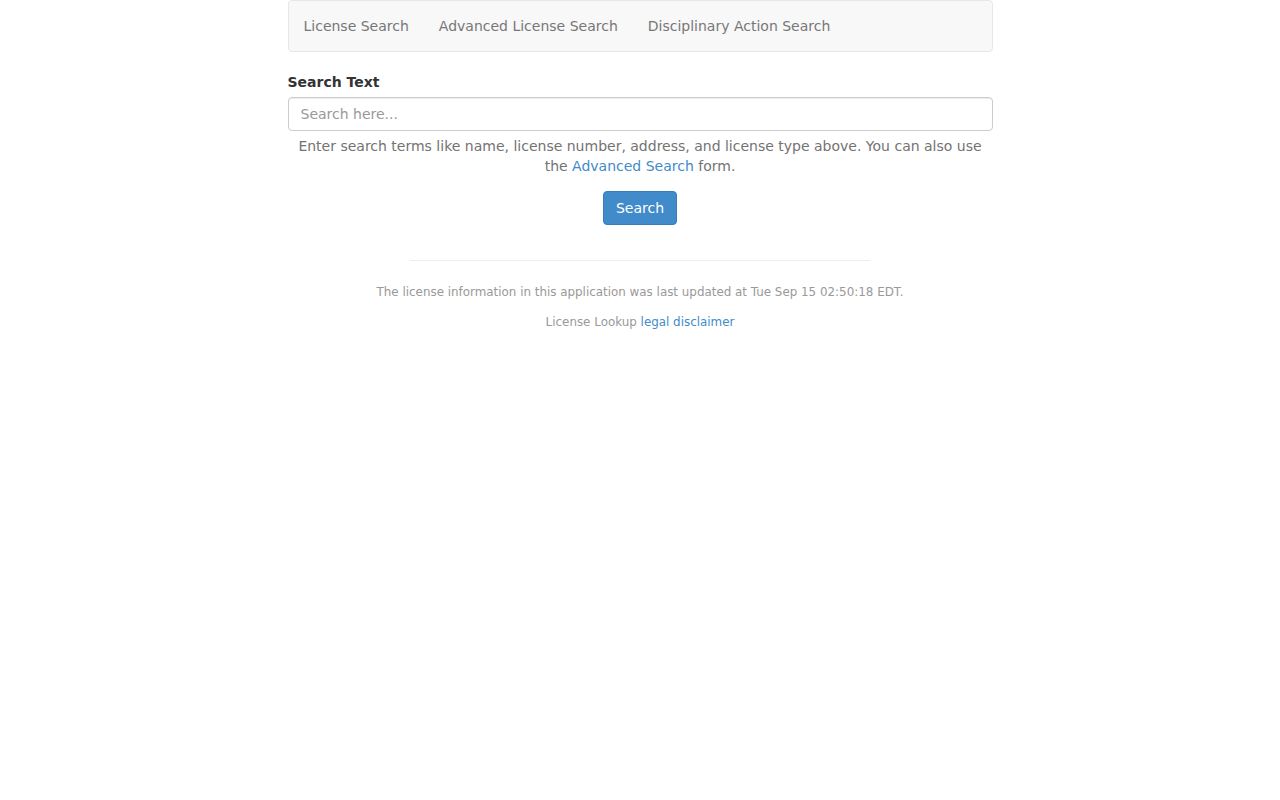
DPOR provides a separate professional record, not a Lee County owner or parcel result.
Lee County Permit History Is Paper
Lee County permit history still lives on paper. The Building Safety and Inspection office sits in Courthouse Room 206 in Jonesville. It offers no online address-to-permit search. You may fill out an application on a computer. A printed copy still has to reach the office. Ask the staff which paper file covers your address, tax-map ID, or prior owner name. A permit file can explain a structure or improvement. It is no substitute for the recorded deed, though.
Permits cover new construction, additions, major renovation, demolition, manufactured homes, wiring, mechanical and fuel systems, fire protection, tanks, and structural changes. The county issues separate forms for building, tank, manufactured-home, demolition, electrical, mechanical/HVAC, sign, and plumbing work, plus affidavits and trade certification. That form page lists requirements and fees, not a live permit lookup. Read the Building Safety and Inspection instructions before taking an application to Room 206.
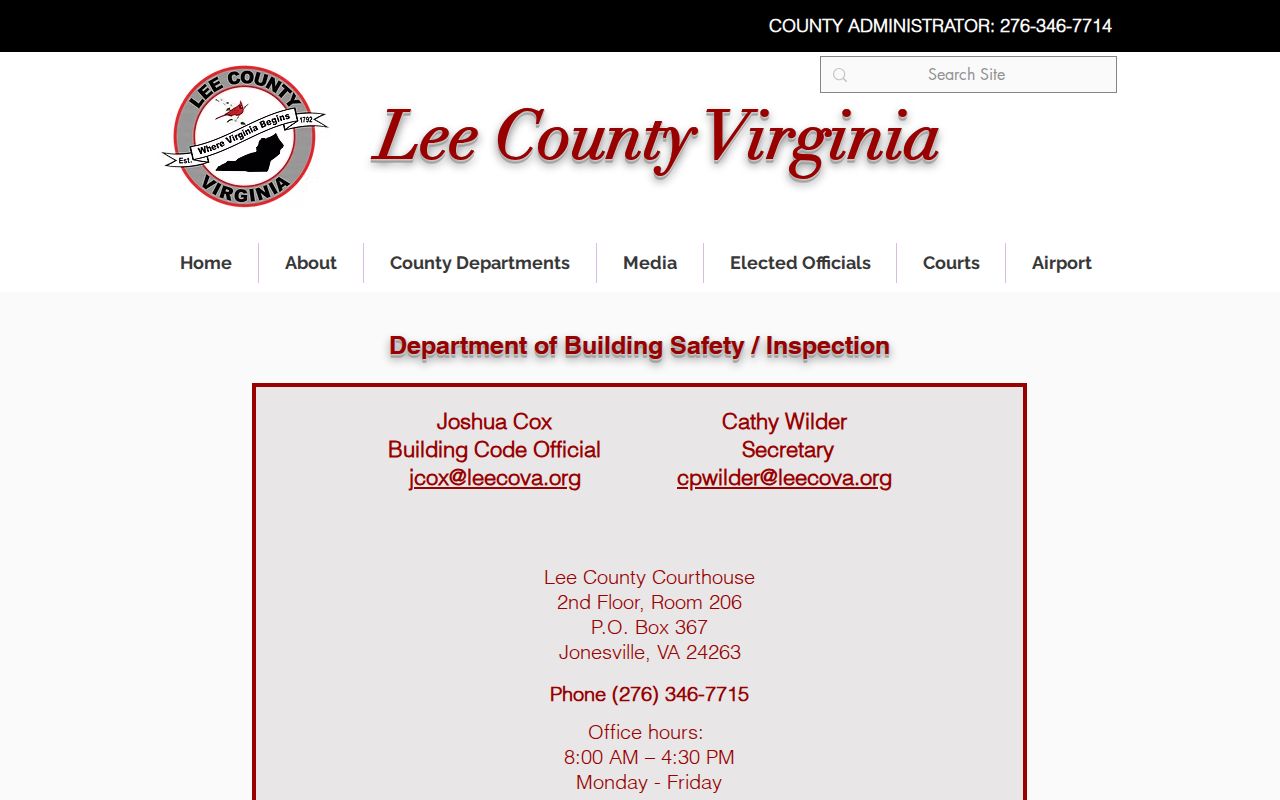
The permit source can fill an improvement-history gap after the parcel is identified.
When a Lee County Search Misses
A blank online result can mean several things. It may reflect a dynamic portal, a spelling change, an older tract description, or a record that was never digitized. The Property Card and SRA form may not render. They do not work in every browser. The offices publish no exact online coverage years. Do not treat a failed query as proof that Lee County has no record. Search alternate owner spellings. Then ask the custodian for the relevant index, book, map, or file.
For land records, contact the Clerk at (276) 346-7763 or visit 33640 Main Street, Jonesville. For a parcel ID, call the Commissioner at (276) 346-7722. For a missing tax bill or current delinquency question, call the Treasurer at (276) 346-7716. Virginia FOIA can request a record from its custodian. But it cannot compel an office to create a custom parcel report.
The Lee County deed-record workflow covers the clerk search and copy path in detail.
Choose a Lee County Search Key
In Lee County, address, owner, and parcel searches each shine at different moments. A situs is the physical property address. A mailing address is where the tax bill goes. That address may sit outside the county entirely. The tax-map number is the county's strongest handoff key between offices, though no fixed digit pattern applies. A historic route address or a town label can narrow the hunt without proving where the parcel sits.
| Search Key | Best For | Where It Works | Watch Out |
|---|---|---|---|
| Address | Start with a known home or tract | Property Card Search and GIS, if their live tools return it | Rural routes and ZIP labels may differ from tax records |
| Owner name | Find assessment or deed references | Property Card Search is advertised for owner lookup; SRA uses party indexing | Search entity, trustee, or estate names as recorded |
| Tax-map ID | Match the county's parcel records | Commissioner, card search, and GIS handoff | Ask the county for the format; none is published |
Not a title search. A Lee County property search can locate public records, but it cannot guarantee clear title, show every unrecorded interest, or settle a boundary. A title company or attorney reviews the legal chain.